Dulce is a WordPress theme built for microblogging: short, frequent posts in mixed formats rather than long-form articles. It ships with support for seven post formats, three gallery display options, four colour variations and a custom audio player, and it is sold on ThemeForest for $39. It suits personal bloggers, tumblelog operators and small publishers who want a Tumblr-style stream on a self-hosted site they control.
What Dulce blog-magazine actually does well
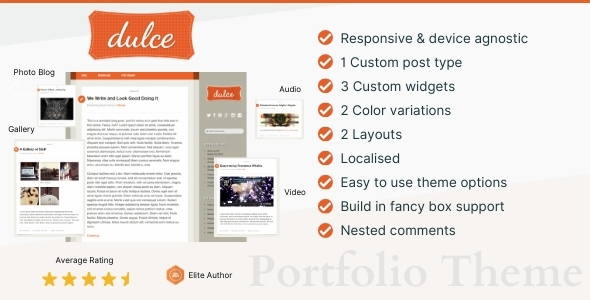
The organising idea behind this theme is the post format. WordPress lets a theme treat a short link, a quote, a photo and a video differently, and Dulce leans into that. Seven formats are supported: Link, Audio, Video, Image, Gallery, Status and Quote. In practice this means a one-line status update and a full gallery post can sit next to each other in the same stream without either looking broken, which is the whole point of a microblog layout.
Video handling is worth calling out. Dulce uses oEmbed, a WordPress feature that turns a pasted YouTube or Vimeo URL into an embedded player automatically. The vendor also notes that the video can be previewed from inside the WordPress editor, so the author sees roughly what the published post will look like before hitting publish.
Gallery posts get three separate treatments: two jQuery slideshows and a grid layout. jQuery is a JavaScript library that handles the animation and interaction; the practical benefit is that a gallery can be presented as a rotating carousel or as a static grid of thumbnails depending on the content. Linked images open in a Fancybox lightbox, an overlay that displays the full-size image without leaving the page.
Audio posts use a custom-designed player rather than the default browser controls, which matters if podcast clips or music samples are part of the mix. There is also a Twitter feed widget and a Flickr feed widget, so a sidebar can pull in activity from those services without a third-party plugin.
On the presentation side, Dulce offers four colour variations, two menu locations with drop-downs two levels deep, four widget-ready sidebars and two page templates (default and no-sidebar). Pagination is built in, so no plugin is needed to move between archive pages. Comments are nested, meaning replies thread under the comment they answer.
A detail that will appeal to people who dislike shortcode clutter: custom styles are applied through the TinyMCE styles drop-down in the editor rather than through shortcodes. The available styles are blue, orange, green and yellow buttons plus left and right pull quotes. Editor stylesheets mean the writing view approximates the live design, which reduces the guesswork of formatting a post blind.
Where a Dulce blog-magazine build fits, and where it does not
The strongest fit is a personal site where the owner posts often and in different media: a photo one day, a quote the next, a video the day after. Designers and photographers who want a lightweight portfolio-plus-journal hybrid are a natural audience, as are writers running a link blog or a curated reading list. Because the theme is fully localised with .po and .mo files included, it can also serve a non-English publisher who needs translated interface strings.
A second fit is the small editorial site that wants a magazine-style front page without a page builder. The two page templates and four sidebars give enough structural variety for a home page, a category archive and a contact page to look distinct.
Where it is the wrong choice: a business site that needs complex layouts, e-commerce, membership gating or a block-based landing page system. Dulce is a blogging theme from an earlier generation of WordPress tooling, and the vendor does not claim page-builder integration or full site editing support. Anyone building a marketing site with dozens of reusable sections should look elsewhere. The same applies to publishers who need a heavy advertising stack or advanced schema markup out of the box.
Setting up Dulce in practice
The prerequisites are modest. The theme requires WordPress 4.0 or later, which any current installation exceeds, and a standard PHP and MySQL hosting environment. Installation follows the normal route: upload the theme package through the WordPress dashboard or via FTP, activate it, then work through the theme options panel.
That options panel is powered by the Theme Options Framework and is described by the vendor as intuitive. Expect to spend time there setting colours, menus and widget areas. Two menus need registering and assigning, and the four widget-ready sidebars need populating if the default layout is kept. The two custom widgets (Twitter and Flickr) require account details or feed IDs to display anything.
The vendor includes a user guide and recommends three plugins for extended functionality: Cleaner Gallery by Justin Tadlock, Gravity Forms, and Codestyling Localization by Heiko Rabe for translation work. The listing is explicit that the theme works without them, so they are optional rather than required. A realistic timeline for a competent WordPress user is an afternoon to get a presentable site live, and longer if content migration or translation is involved.
One practical note: the theme was last updated by the vendor in April 2021. That is not disqualifying for a blogging theme, but it does mean buyers should check current WordPress compatibility themselves rather than assuming it has been tested against the newest releases.
Strengths and limitations
Strengths
- Seven post formats let a single stream mix short statuses, quotes, images, video, audio, links and galleries without layout breakage.
- Three gallery presentations and a Fancybox lightbox cover the common ways photographers and curators want to show images.
- oEmbed video means no manual embed codes and an in-editor preview.
- Built-in pagination and nested comments remove two plugin dependencies.
- TinyMCE style drop-down replaces shortcodes, which keeps post content portable if the theme is ever swapped.
- Localisation files included, so translation is a known quantity rather than a custom job.
- A user guide ships with the package.
Limitations
- The last vendor update was April 2021. Buyers get no recent changelog activity and should verify compatibility with their WordPress version before purchase.
- There is no page-builder or block-editor-first layout system described, so building complex non-blog pages means working within the two supplied templates.
- The Twitter and Flickr feed widgets depend on third-party APIs that have changed significantly since the theme was released; the vendor does not state whether these still function.
- Four colour variations is a small palette compared with themes offering full colour pickers.
- Two menu locations and four sidebars is a modest structural ceiling for a magazine-style site with many sections.
How Dulce compares with other blog-magazine themes
The blog-magazine category splits roughly into two camps. One camp is built around the block editor and page builders, offering drag-and-drop home pages, dozens of prebuilt templates and frequent updates. The other camp, where Dulce sits, is built around post formats and a theme options panel. The trade-off is straightforward: the builder-driven themes give more layout flexibility and a more active development cycle, while format-driven themes like this one tend to produce cleaner, faster, more consistent post streams with less configuration.
Against multipurpose themes that include a blog module, Dulce is narrower but more opinionated. A multipurpose theme can do a blog, but the author has to configure it to behave like one. Dulce behaves like a microblog out of the box, which shortens setup for the right project.
Against free Tumblr-style themes, the $39 buys a documented options panel, localisation files, a user guide and a support relationship with the developer, designcrumbstoo. The theme has 385 sales on ThemeForest, which is a modest but non-trivial figure and suggests a small, established user base rather than a brand-new release.
Frequently Asked Questions
What is a Tumblr-style WordPress theme?
It is a theme that arranges posts as a continuous stream of mixed media rather than as uniform articles. Dulce achieves this through WordPress post formats, so a quote, a photo and a video each get their own presentation while sharing one feed. The result reads like a Tumblr dashboard but runs on self-hosted WordPress.
Does Dulce work with the current version of WordPress?
The vendor states compatibility with WordPress 4.0 and above, and the theme was last updated in April 2021. Current WordPress releases are far newer, and the listing does not confirm testing against them. Buyers should check the ThemeForest comments or ask the developer before purchasing for a production site.
Do I need plugins to use the gallery and video features?
No. Gallery slideshows, the grid gallery, the Fancybox lightbox, oEmbed video and the custom audio player are all part of the theme. The three plugins the vendor recommends — Cleaner Gallery, Gravity Forms and Codestyling Localization — are optional extras for extending gallery markup, adding forms or translating the theme.
Can Dulce be translated into another language?
Yes. The theme ships fully localised with .po and .mo files, which are the standard WordPress translation files. Translators edit the .po file and compile it to .mo, or use a tool such as Poedit. The vendor also recommends the Codestyling Localization plugin by Heiko Rabe for handling this from inside WordPress.
Verdict
Dulce is a sensible purchase for a personal blogger, photographer or curator who wants a self-hosted microblog with mixed post formats and does not want to assemble that behaviour from a multipurpose theme. The format support, gallery options and shortcode-free styling are genuine conveniences, and the price is low. It is a poor fit for anyone building a business site, a store or a page-builder-driven marketing presence, and the 2021 last-update date is a real consideration for production work. Buyers who accept that trade-off get a focused, well-documented blogging theme at a modest cost.