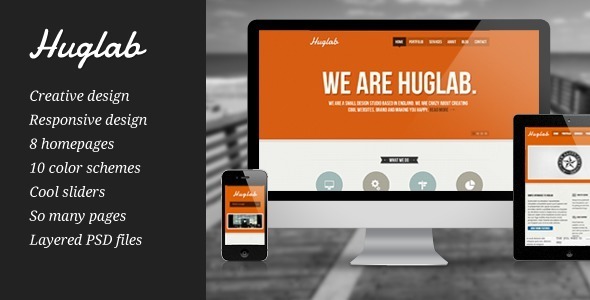
A responsive HTML template for business, agency and portfolio sites, Huglab sells on ThemeForest for $17 from developer honryou. It bundles eight homepage layouts, ten colour schemes and a broad spread of inner pages into a static site kit for freelancers and small studios that need a marketing site built quickly. The detail that decides everything else: this Huglab business template is plain HTML, CSS and JavaScript rather than a WordPress theme, so anyone shopping for a CMS-driven build should look elsewhere.
What the Huglab Business Template Actually Gives You
The headline number is eight homepage designs. In practice these are eight layout arrangements built from the same component library — different hero treatments, column structures and section orders — rather than eight unrelated designs. That is still useful, because it means a project can start from a layout close to the finished brief instead of being reverse-engineered from a single demo screen.
Ten colour schemes and sixteen background patterns (eight for headers, eight for the main body) sit on top of that. The practical effect is a decent range of visual identities from one download: a conservative consultancy site and a brighter creative studio site can both be produced from the same template without writing new stylesheets from scratch.
Sliders are included and run on jQuery, the JavaScript library the template depends on. They suit a hero image carousel or a short rotating set of service messages. The vendor does not publish performance or accessibility notes on the slider, so it is worth testing on a mid-range phone before committing to a large image set.
The layered PSD files are the standout inclusion at this price. Every screen can be opened in Photoshop with its layers intact, which lets a designer restyle the visual language before any markup is touched, then hand the result to a developer as a reference. Templates in this bracket frequently ship without design source files, so their presence is a genuine differentiator for studio work.
Typography uses three faces: Damion, a script font from Google Fonts; Droid Sans, also from Google; and Bebas Neue, which the vendor lists as a self-hosted download from Font Squirrel and must therefore be uploaded with the site. Icons come from the Iconsweets2 set. All of this is standard, replaceable and well documented in the file credits.
Project Types That Suit the Huglab Business Site
The strongest fit is a small brochure site with a fixed set of pages: home, about, services, a portfolio or case-study grid, and contact. Agencies building a marketing presence for a client who will not be editing content weekly will find the page inventory already covers the brief, and the static output loads without a database or a stack of plugins to maintain.
It also works well as a quick-turnaround landing presence — a campaign microsite, an event page, a freelancer’s portfolio — where the deadline matters more than long-term extensibility. The 214 recorded sales suggest a modest but real base of buyers who have taken this route.
Where the Huglab business template is the wrong choice is any project with a content engine behind it. A blog with regular posting, a membership area, a WooCommerce store, a directory with searchable listings, or a client who expects to log in and change their own opening hours — none of those belong on a static HTML template. Rebuilding WordPress behaviour on top of it would cost more than buying a proper theme. Sites with strict accessibility or Core Web Vitals requirements should also be cautious, since no testing evidence is published.
Setting Up the Huglab Business Site in Practice
Prerequisites are modest: a text editor, FTP or SFTP access to a web host, a domain, and enough HTML literacy to find a heading in a file and replace the words inside it. There is no build step, no package manager, no database and no WordPress installation. Files upload and the site runs.
The realistic timeline for a five-page brochure site using existing layouts, with the buyer’s own copy and licensed photography, is a few hours to a single working day. Restyling from the PSD files first adds design time on top. The largest hidden task is not technical at all: writing the copy and sourcing images that are legally usable, because the vendor explicitly excludes the preview photographs from the download.
The vendor does not publish a setup guide in the listing, so buyers should assume they will be reading the markup rather than following a manual. That is normal for HTML templates of this vintage but worth budgeting for.
Strengths and Limitations of the Huglab Business Template
Strengths
- Seventeen dollars buys the full template plus layered PSD source files, which is